Moors at Arne Coastal Change Project

Moors at Arne Coastal Change Project

Moors at Arne Coastal Change Project

Introduction

The Environment Agency, RSPB and Natural England are working together to adapt approximately 150 hectares of the Moors at Arne into a diverse wetland habitat.

With sea level rising, important habitat for wildlife all around Poole Harbour be lost over the next 30 years. Where rising waters press against fixed sea defences, ‘coastal squeeze’ occurs, this means a loss of inter-tidal features such as mudflats and salt marsh. New places for coastal wildlife will need to be created to keep the natural features of the lost landscape, and allow the government to realise its 25 year environment plan, whilst flood risk to homes and businesses from the sea continues to be managed.

The project has developed outline proposals since its public launch in October 2018. Thorough surveys and assessments have been conducted that support detailed design and a planning application for summer 2022.

 The information on this page has been supplied by the Environment Agency to inform Dorset Coast Forum members and the wider public on the Arne Moors Project. The Dorset Coast Forum is an independent, neutral and non-political Coastal Partnership and will maintain a neutral position, neither for or against the project.

Scan the QR code or visit www.kier.uk/arne to get project news and updates straight into your inbox 

Project Overview

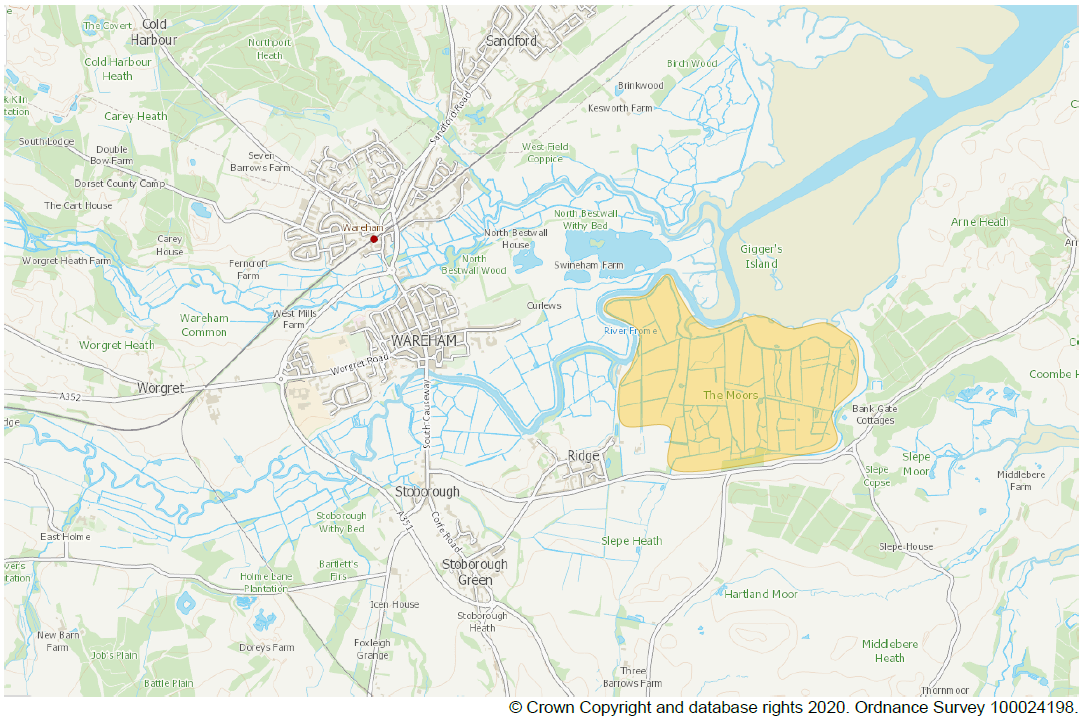
In Poole Harbour, the project partners are working together to explore how The Moors at Arne can be converted to inter-tidal habitat to compensate for the ‘coastal squeeze’ losses.

The scheme will involve the construction of new tidal embankments further inland than the existing harbour edge embankments. Once the new embankments are in place, the land in between will be opened to the action of the tides by the creation of three controlled breaches in the existing embankments.

The sediment brought in by the high tides will settle out as the tide turns, and gradually the low lying land will accrete and new mudflats and salt marsh will be created. The tidal water coming through each of the three breaches will have different dynamics and salinity characteristics, and this will lead to a variation of topography and a mosaic of habitats across the site.

The project design also includes shallow saline (salt water) lagoons on the western side to provide feeding grounds and roosting sites for a variety of bird species. These lagoons are important for the long term sustainability of the Special Protection Area (SPA) protected habitat.

In the southerly part of The Moors, there is a Special Area of Conservation (SAC) with internationally rare flora in a unique habitat mix. This area of the site will be protected with an embankment designed to facilitate the best mixture of sustainability and transition in a changing long term climate.

Much of the site is also protected as a wetland of international importance (RAMSAR site) and as a Site of Special Scientific Interest (SSSI). The impact of the project on freshwater features under these protections will be mitigated by the design of new freshwater features in the area to the south of the new embankments. There will also be some compensation off site at land owned by the Environment Agency at East Stoke.
The project is being carefully designed so that there will be no adverse impact on flood risk to any of the neighbouring properties. The flood risk assessment is comprehensive and includes consideration of tidal flood risk, river and stream flood risk, groundwater flood risk and surface water flood risk.

The project is also considering the geomorphological aspects of changes in the River Frome / Poole Harbour (river /tide) interactions. Computer modelling is being used alongside bathymetric surveying, pre- and post-scheme, to predict and then monitor changes in river siltation.

The Moors is owned by the RSPB and is currently managed as a wildlife reserve which is not open for public access. The project will open up portions of the site with safe walking routes, and some disabled access, using the RSPB’s experience of owning other similar sites throughout the country.

The project is mindful of the impact that construction traffic can have on local communities, and so is actively seeking to reduce the amount of earthworks material to be brought in to the site. This is being done by careful analysis of the material available on the site, together with practical considerations of the embankment design and maintenance.

Watch this video to find out about Moors at Arne Project

Contact Us

Contact Us

It is important to the project team that the community is involved in the project. At this stage our priority is to make sure we fully understand issues of concern for the construction period. We would also like to hear about how you would like to stay informed and engaged with the project going forward, so please reach out to us using our contact details below.

Email: themoorsatarne@environment-agency.gov.uk

Post: The Moors at Arne
Environment Agency
Rivers House, Sunrise Business Park, Higher Shaftsbury Road
Blandford DT11 8ST

Project partners

The partners delivering the Moors at Arne scheme have for over fifty years worked to keep Purbeck a special place. This scheme is a continuation of that work, and builds on many similar successful schemes elsewhere. The partnership will maximise the benefits for both local people and wildlife.

Dorset coastal stories

Dorset coastal stories

Dorset Coastal Stories

Dorset Coastal Stories is a series of short films which showcase the opportunities in commercial fishing and aquaculture in Dorset.

The 4 films are all based in Dorset, which follow the stories of local people and their pathways into fishing and aquaculture. One more films will follow later in the year, so watch this space. Please do watch and share these inspiring stories!

These films have been directed and produced by Jo Stewart-Smith from Butterfly Effect Films with photography and videography by Simon Vacher. Do take a look at Butterfly Effect Films’ Boat Stories series!

Young & Fishing with Sam Shuker

Sam Shuker, a 17 year old trainee commercial fisherman takes us out on a scallop boat from Lyme Regis and tells it like it is. He works long hours, determined to get as much experience as he can ready for the day when he is old enough to skipper a boat himself. Despite having all his fisherman tickets, Sam is also going to train to be a commercial diver, so that he can hand dive for scallops. He talks about the importance of the marine reserve for his fishery. He’s seen first-hand the ups and downs his fisherman father has gone through so he knows he’s chosen one of the toughest careers out there. But he loves the sense of freedom fishing brings. He says ‘the opportunities I have – it’s so much more than a job, it’s something I live for. I am determined to fight for it and if I have to rebuild it.’

The Fisherman Chef with Ashley Stones

This is an inspirational story of how one commercial fisherman affected, like so many, by quotas has found a way to make it work. For several years Ashley lived the dream. He tells us ‘I spent all my weekends and school holidays fishing – I absolutely loved it I couldn’t get enough of it. After college I went into catering but it was the fishing I wanted to do. I decided to jack in my proper job and turn my hobby into a career.” He’s passionate that rod and line fishing is sustainable and describes how quotas rocked his friends and colleagues in the Weymouth bass fleet. He has managed to keep fishing, catching less fish (under quota) but using his entrepreneurial and cheffing skills to add value to the fish he catches.

The Fisheries Observer with Ruth Hicks

Ruth Hicks our fisheries observer, says ‘people are surprised when she says she’s been out on a fishing trawler for a week, but more and more women are coming into the job now’. We follow her working on a fisheries science partnership, with fisherman Mark Cornwell and his crew, out of West Bay, (Bridport) looking at an issue – the discard ban, which could seriously impact the livelihoods of many small fisherman -especially those in mixed fisheries like Mark. It’s a fascinating story and as Liseve, Ruth’s co worker says ‘there’s a lot fishermen can teach us and working together we get the best blend of information and knowledge and sharing.’ In this case if, the scientific data proves what the fishermen are saying anecdotally -then there’s a chance for a win all round – including the fish!

Aquaculture in Dorset

Take a whistle-stop tour around the growing business of aquaculture in Dorset.

Meet the key people in a range of different kinds of aquaculture ranging from seaweed to shellfish and lumpfish (cleaner fish), and discover the wide range of opportunities for different kinds of work in the sector.

Dorset Coastal Stories were funded by

Dorset Coastal Connections 

Dorset Coastal Connections 

Dorset Coastal Connections

Dorset Coastal Connections was a portfolio of 18 projects along the Dorset Coast, led and coordinated by Dorset Coast Forum and funded by the Coastal Communities Fund.

Project overview

The 18 projects, which made up the portfolio, spanned across the Dorset coast from Lyme Regis to Christchurch and connects communities to the coast and to each other by improving physical, digital and emotional connection. The projects aimed to improve the public places we use and cherish by making them more attractive, functional and providing a sense of place using artistic interpretation to enhance these special coastal places

The Ministry of Housing Communities and Local Government (MHCLG) awarded £5.6m of Coastal Community Funding (CCF) in May 2017 to the project, following a successful partnership portfolio bid which was coordinated by Dorset Coast Forum. Together, with match funding from many partner organisations, this collaboration of projects has overall invested £18.5million to connect our urban and rural coastal areas and has worked with communities to promote the Dorset coast.

The project was driven by 4 key themes:

  • Sustaining and developing the tourism economy
  • Having thriving and dynamic coastal and maritime businesses to encourage economic growth
  • Connecting the urban, rural and coastal communities across the Dorset coast
  • Conserving, enhancing and promoting Dorset’s special natural and cultural assets

The Dorset Coast Connections – people and places video showcase how this portfolio of projects connect communities with our spectacular coastal region.

Watch the Dorset Coastal Connections video

Contact

Dorset Coast Forum

Dorset Coast Forum

For further information about this project please contact:
dorset.coast@dorsetcouncil.gov.uk
01305 224833

Dorset Coastal Connections

This project was led by Dorset Council and coordinated by Dorset Coast Forum as part of the Dorset Coastal Connections portfolio. Funding was from the Coastal Communities Fund, managed by the Ministry of Housing, Communities and Local Government (MHCLG).

Aquaculture

Aquaculture

Aquaculture

Dorset Coast Forum has a rich history of engaging and working with the commercial aquaculture industry. In 2020, on the back of the successful Dorset and East Devon Fisheries Local Action Group programme the Dorset Mariculture Strategy was published and aims to provide a route for sustainable marine aquaculture development across Dorset.

Dorset Mariculture Strategy 2020-2025

The Dorset Mariculture Strategy’s Vision

“To have an industry-leading, highly productive aquaculture sector, driven by sustainable production practices and continuous innovation. A sector that delivers a resilient seafood supply chain, contributes to UK food security and brings substantial socio-economic benefits to coastal communities across Dorset”

South West Aquaculture Network (SWAN)

SWAN is a dedicated advocacy group committed to advancing sustainable aquaculture across the South West. Joining the South West Aquaculture Network equips you with invaluable resources, connections, and support to thrive in the aquaculture sector. Embrace the opportunity to be part of an innovative community committed to advancing the industry and promoting sustainable practices.

 Find out more here >


Mariculture Careers

This animated film about Mariculture careers aimed at 11-14 year old students, is a collaborative project funded by BCP Council and created by Discover Science Christchurch designed to increase awareness and visibility of Mariculture.

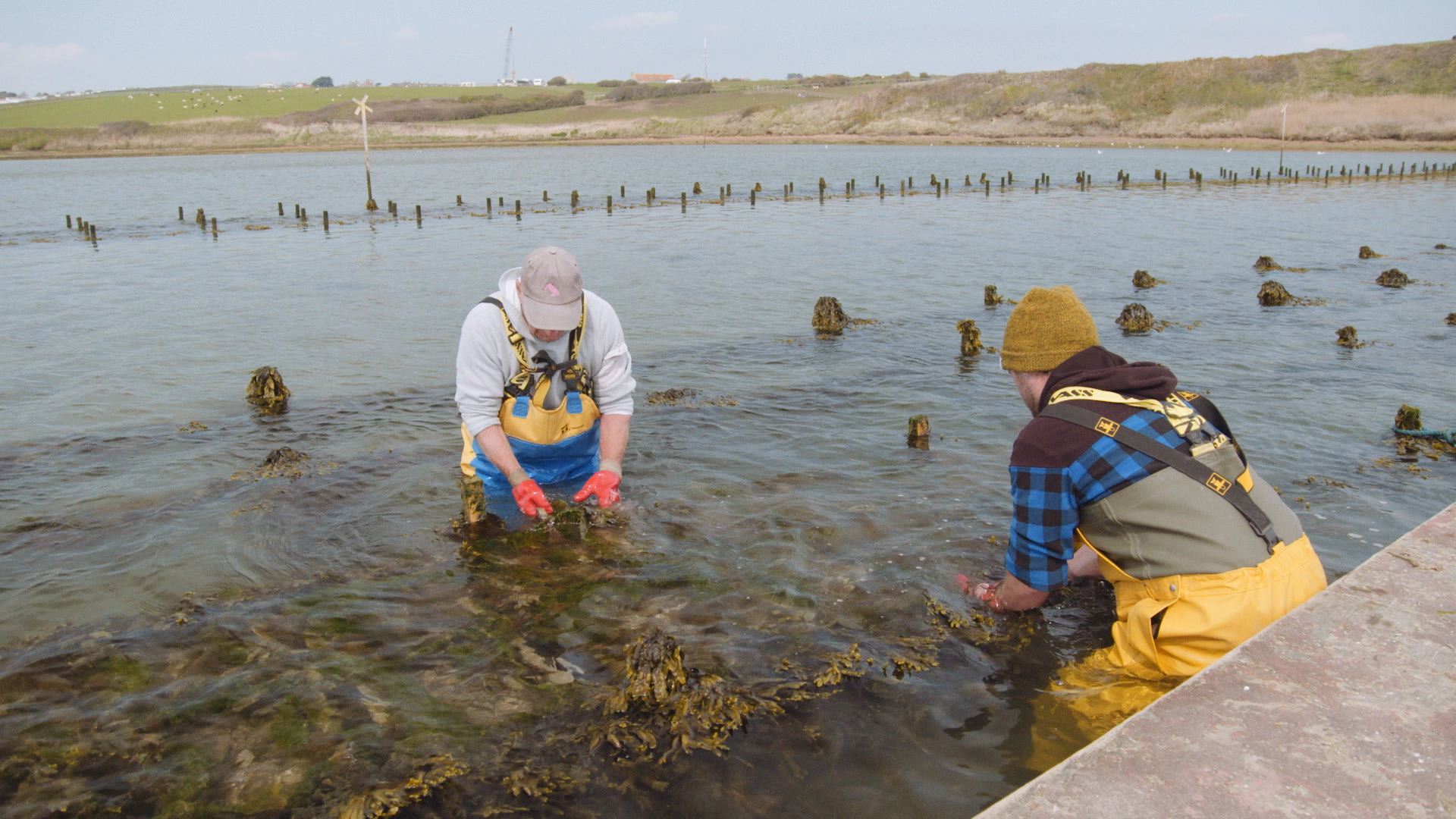
Oyster Farmers at Work. Photo credits: Butterfly Effect Films for both images  

Contact

Dorset Coast Forum

Dorset Coast Forum

Dorset Coast Forum is currently assessing funding opportunities to provide a key point of contact within the team and hopes to have an officer in post in the future.

Weymouth Station Forecourt and new Pocket Park

Weymouth Station Forecourt and new Pocket Park

Weymouth Station Forecourt and new Pocket Park

Improvements to Weymouth Train Station forecourt, car park and pocket park.

Weymouth Station Gateway wins double at engineering awards

We are pleased to announce that the improvements to Weymouth Train Station forecourt, car park and pocket parkhas won two trophies at the ICE South West Civil Engineering Awards 2023 in November 2023.

As well as being presented with the Community Award, Weymouth Station Gateway was also given the Judges’ Special Award. The judging panel was impressed with the collaborative, respectful partnership behind the scheme, bringing together the local community, the rail company and the transport authority to improve the public realm. The judges described the project as an outstanding example of infrastructure that unites communities and improves people’s daily lives.

Read more here > Weymouth Station Gateway wins double at top engineering awards – Dorset Council news

Project overview

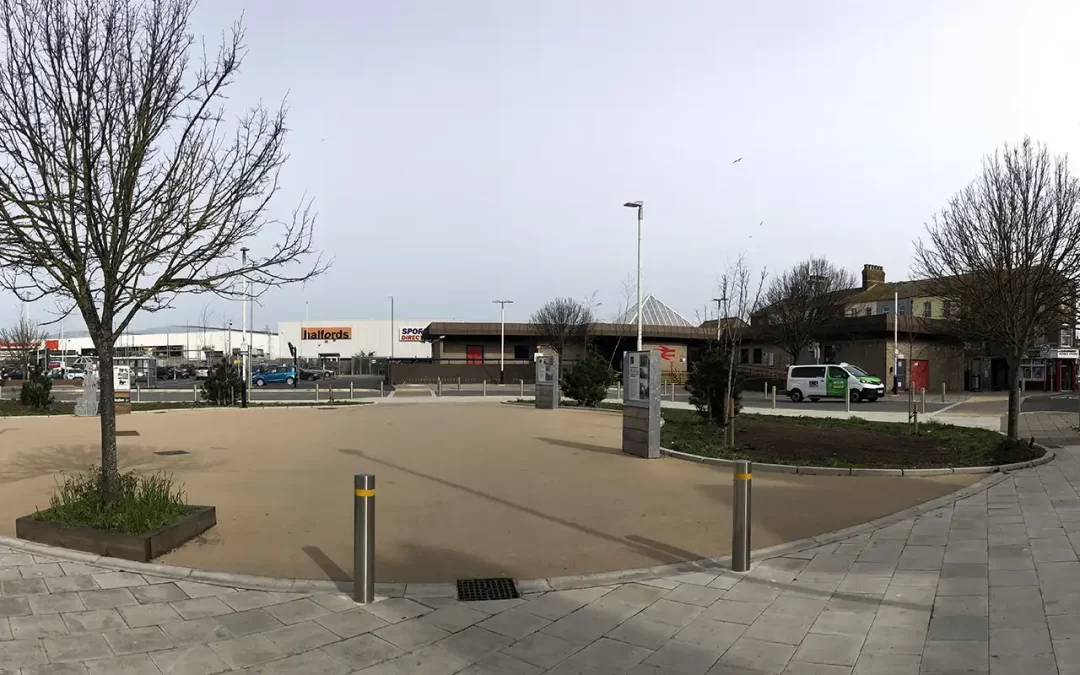
Weymouth train station has seen some significant improvements including transformation of the train forecourt into a more welcoming and user-friendly place for visitors and residents of the town, and a new Pocket Park that celebrates local heritage.

This multi-agency, partnership-led and funded project included:

  • Much improved station forecourt with new pedestrian areas and walking routes.
  • New open space in centre of forecourt available for pop-up events and seasonal Christmas Tree.
  • Information panels outlining the history of the railway in the area.
  • New bus interchange with direct links to Portland and the Jurassic Coast and real time rail, bus and local information screens.
  • Dedicated taxi rank.
  • Improved car park layout with new exit and lower wall with railings – improving visibility and public safety.
  • New Pocket Park alongside B&Q, including existing track and signage referencing Weymouth’s railway heritage.
  • Pocket Park also operates as a wide and much improved walk and cycle way to Radipole Park, Lakes and Jubilee Retail Park.
  • Completely refurbished canopy on platforms 2 and 3.
  • Additional secure cycle storage.
  • New station café with information displays promoting rail travel.
  • Crime prevention hub base for British Transport Police, SWR’s Rail Community Officers and local police.
  • Living wall adjacent to train station exit.

The project was coordinated by Dorset Coast Forum in consultation with the Project Steering Group who met on a regular basis to discuss updates, feed into the design plans and assist with decision making. Steering Group members are Dorset Coast Forum, Dorset Council, Weymouth Town Council, Weymouth BID, Community Safety Team, Public Health Dorset, South Western Railway, Weymouth Area Development Trust, First Wessex Buses, Local Melcombe Regis Councillors.

In addition, we worked closely with key stakeholders including Network Rail, WSP Design Consultants, Hanson Contracting, Dorset Police, British Transport Police and Weymouth Taxis Station Association.

Thank-you

We would like to give a huge thank-you to all project partners and stakeholders listed above for their time, completing the works and giving advice and support throughout the project.

Our gratitude also goes to the project funders, including Dorset Council for contributing around £727,000, including funds from the Local Transport Plan, Contain Outbreak Management Fund and Community Infrastructure Levy; and for Southwest Railways for contributing £436,000 from the Customer and Communities Improvement Fund.

Thank-you also to Public Health Dorset for £35,000 contribution towards the development of Pocket Park, We Are Weymouth for £15,000 contribution towards CCTV and Weymouth Town Council for contributing £1,000 towards maintenance and for agreeing to take on longer term maintenance of the historical information panels.

We would also like to thank Chris Smith from Smith and Jones for the creation of the historical information boards which can be seen at the station forecourt, at Pocket Park, the Loop and at the Quay. Thank-you to those who contributed photos and gave historical details that made up the content of the panels, including Graham Perry from Weymouth Museum, Geoff Pritchard and Mike Oakley.

Last, but not least, we would like to thank local residents and local businesses who gave their input into the original design, detailing what they felt were issues they wished to be resolved and elements they would like to see in this space. We hope that the final result is something that you and everyone else involved, can feel proud of.