
Storms Impacts on the Dorset Coast
The UK coastline has taken a battering this January 2026, with a succession of winter storms bringing persistent heavy rainfall and powerful winds to the South West. These energetic conditions have caused noticeable changes along the Dorset coast.
Have you spotted your local beach looking a little different lately?
While coastal change is a natural part of life by the sea, the extreme storms of January 2026 have carved, shifted, and sculpted our shores in ways we don’t normally witness in such a short space of time.
The storms that transformed our coast:
- Storm Goretti – 8–9 January 2026
- Storm Ingrid – 23–24 January 2026
- Storm Chandra – 26–27 January 2026
Each storm delivered its own punch, and together they left a striking mark. On Ringstead Beach, for example, the image on right shows how waves have removed large areas of pebbles, revealing bedrock that’s usually hidden beneath. 📷 Dorset Council, 29 January 2026

Is it natural for pebbles and sand to disappear from our Beaches?
Storms Impacts on the Dorset Coast
West Bay
Following the January storms, Dorset Council carried out a major operation to clear approximately 10,000 tonnes of storm‑driven shingle and sediment that had built up in West Bay Harbour, the largest build‑up seen in over 20 years! An 80‑ton crane with a 1‑tonne grab was used to dredge the harbour entrance following repeated south‑easterly storms.
Alongside this work, the Environment Agency carried out its annual beach sea‑defence replenishment. Material recovered from the dredging operations within the harbour was reused as part of this replenishment programme, helping to reinforce coastal defences and reduce flood risk. The Environment Agency have now completed the annual beach replenishment.
Water‑injection dredging trials also ran alongside crane operations, taking advantage of spring tides to help move loosened sediment. In addition, the Bridport Harbour team continue its routine work of using the sluice gates to flush accumulated sediment from the harbour system. This activity is usually carried out on evening low tide.
Video on right show the crane operations and water-injection trials. 📷 🎥 Dorset Council


Images: Left: Sand bar in West Bay Harbour entrance. Right: 1-tonne grab used to remove material from Harbour entrance
Coastal change at Studland Bay beaches
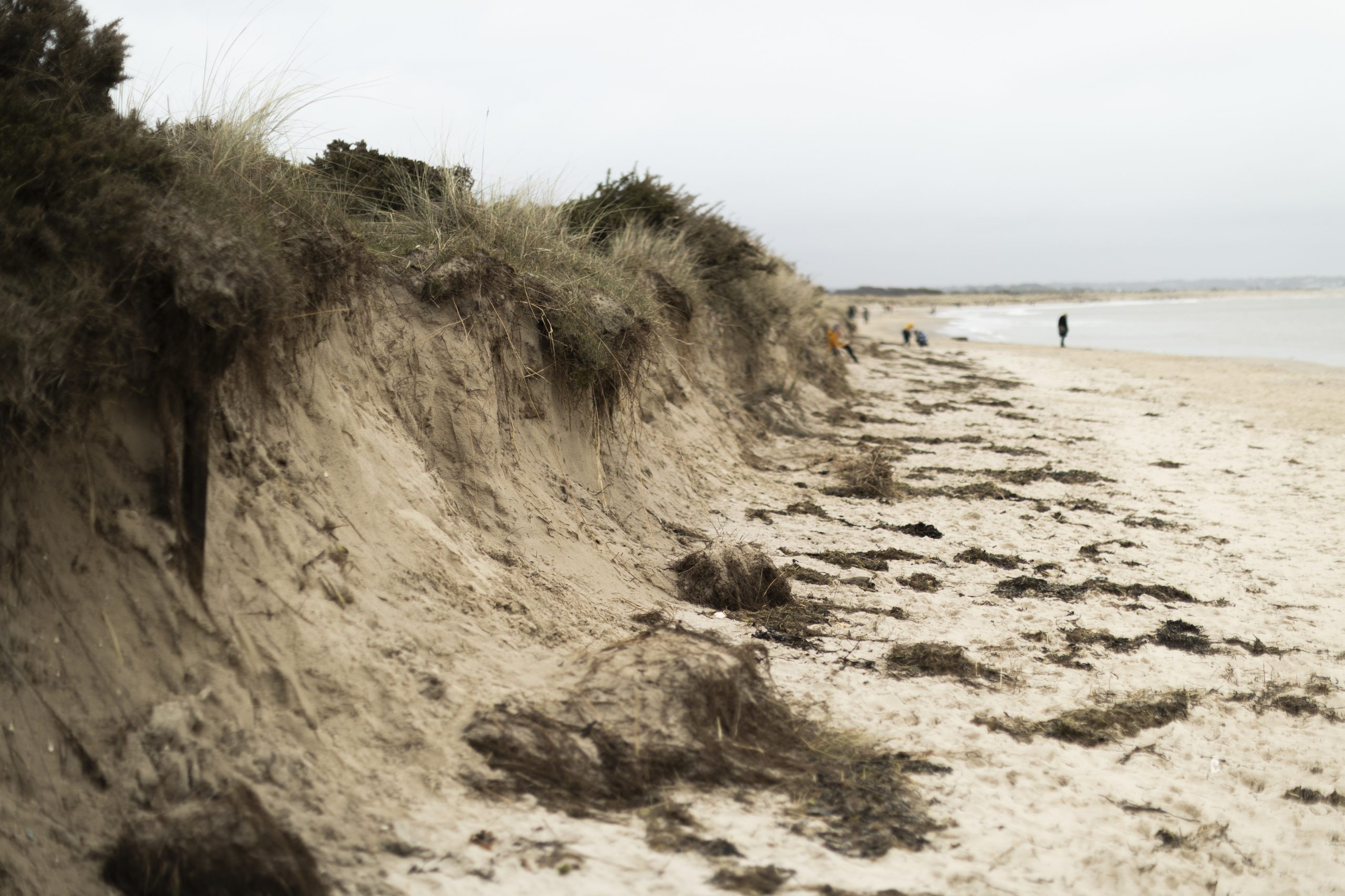
Knoll Beach bore the brunt of the winter storms at Studland Bay. Storm Chandra in January hit the hardest, being unusual in that the biggest waves were coming from the southeast. The worse erosion was around the café area, where the sand dunes were cut back by 4-5 metres. The previously sloping dunes, covered in vegetation, were sliced away to form bare cliffs (Image 1 below)
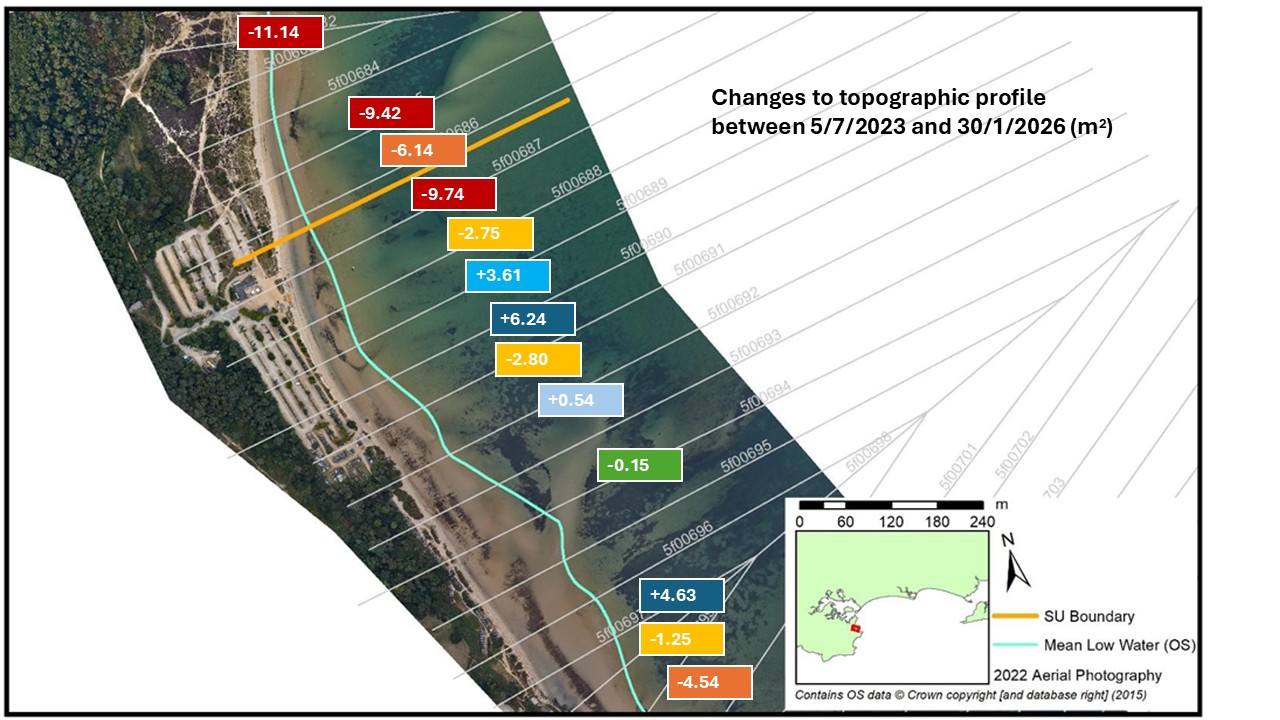
A post‑storm survey by the Channel Coast Observatory found that between July 2023 and January 2026, Knoll Beach lost 32.91 square metres of sand. The map below shows where sand was lost and where it was deposited (Image 2 below). Erosion at Middle Beach was less of an impact, thought to be because the removal of the old sea defences had allowed a build-up of sediment.
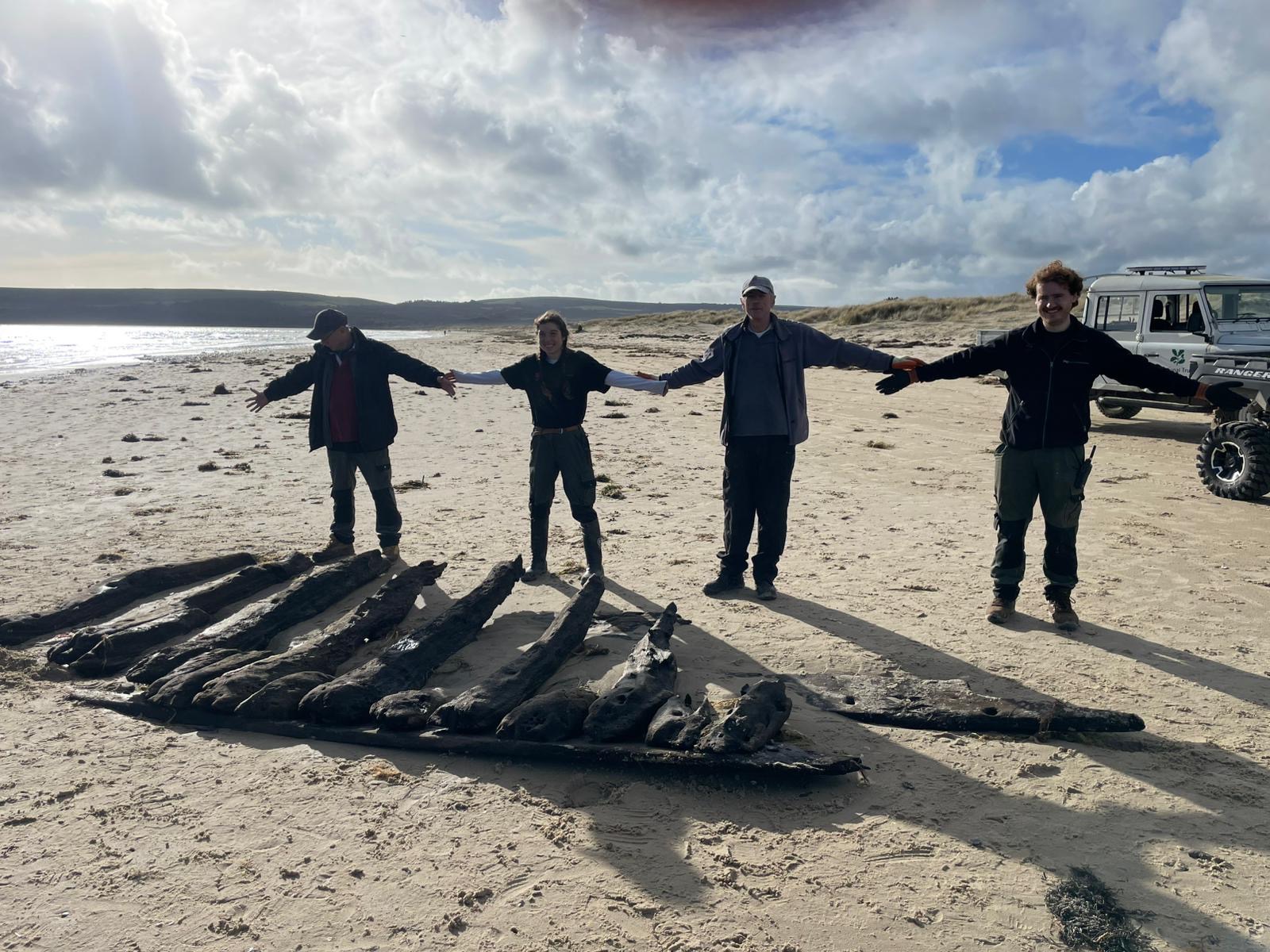
There were two other strange and dramatic impacts of the storms at Studland Bay. Firstly, wave action around Shell Bay lifted the sand from the beach, revealing part of a 17 century ship, known as the Swash Channel Wreck. When the ship sank, it would have been lying on the seabed, but falling sea levels meant it had been buried under the beach for centuries (Image 3 below).
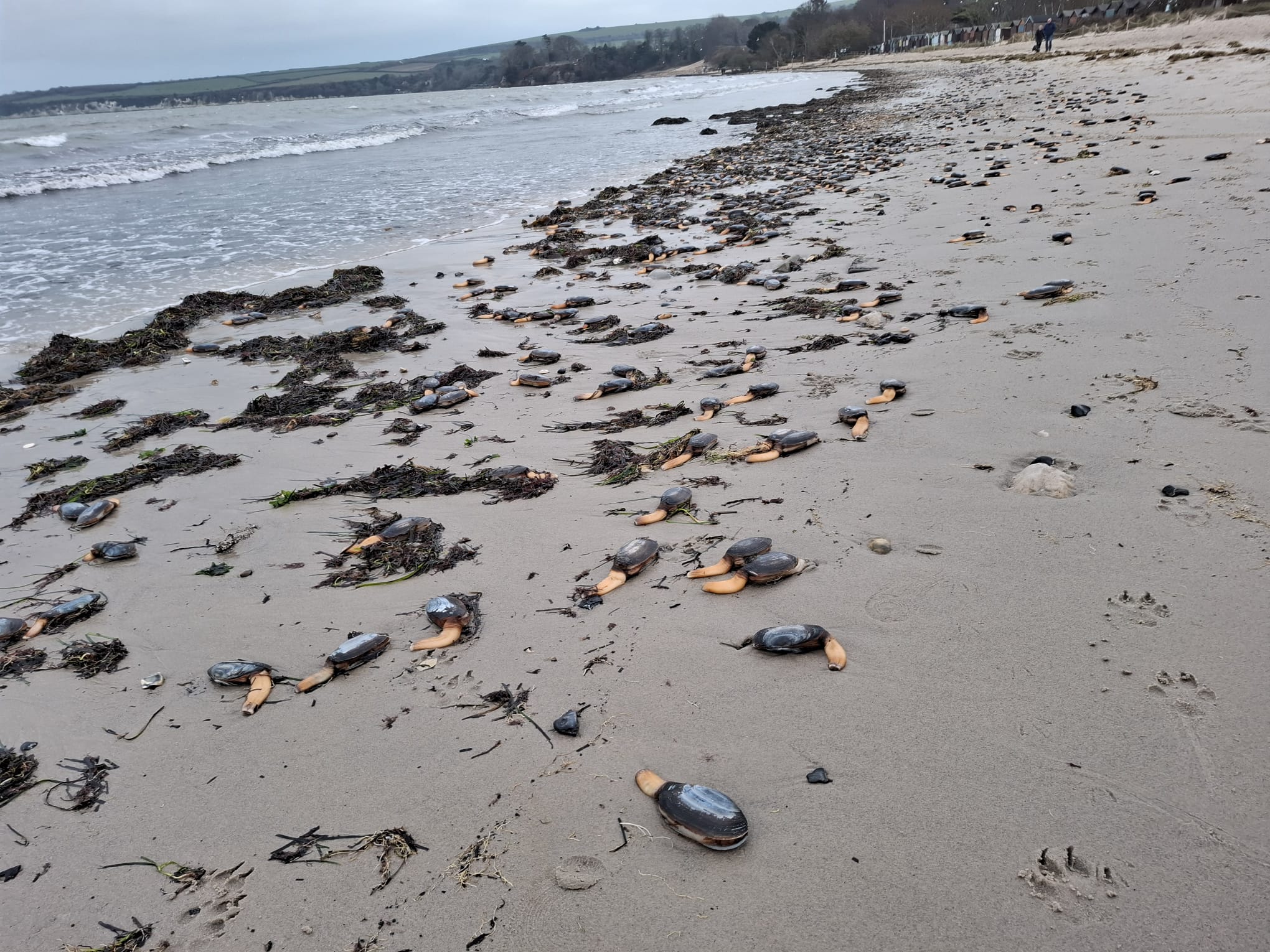
In another rare event, hundreds of otter clam shells were washed onto the beach. These bivalves normally live buried deep beneath the seabed, using their siphons (fleshy tubes) to filter plankton and algae from the water. The easterly winds whipped up waves powerful enough to scour the seabed and lift them out of their hiding places. Although many were still alive, these creatures would not survive even if put back in the sea, because they wouldn’t be able to anchor themselves in the seabed again (Image 3 below).
📷 National Trust Studland Bay
Weymouth Beach
Weymouth Beach saw huge movement of sand causing crevices and ridges in the sand.
📷 Dorset Council

Swanage Beach
Sand has been completely removed from the main Swanage Beach.
📷 Dorset Council (top) 📷Swanage Town Council (bottom)


Lyme Regis
Sand was stripped away from the upper section of the beach by Storm Ingrid and formed a new sandy shelf on the lower section of the main town beach at Lyme Regis.

Landslides and Rockfalls
Rockfalls and landslips can occur at any time. However, heavy rain, strong winds, large waves and rapidly changing weather conditions can make our coastline even more unpredictable, increasing the likelihood of rockfalls and landslips.
For your safety, avoid visiting coastal locations during storms and always follow local safety advice or any restrictions in place.
General Safety Advice When Visiting the Coast
- Keep away from cliff edges and avoid sitting, standing, or walking at the base of cliffs – rockfalls can happen without warning.
- Always read and follow safety signs.
- Stay on designated paths to the beach and along the coast. Do not follow pets if they stray off the path
- Check tide times before you set out and keep an eye on the changing conditions.
- If a landslide or rockfall occurs, move away quickly and call 999 to report it.
- Do not climb or walk over any landslip or rockfall debris.
👉 Find more detailed guidance on:


Large Cliff Fall at Stonebarrow, Charmouth
These images show a large cliff fall which occurred at Stonebarrow, Charmouth on 11 February 2026, resulting in the loss of part of the South West Coast Path. The coast path at this location is closed, and a diversion has now been put in place. 📷 Dorset Council
Useful links ....
South West Coastal Monitoring
Find out about how our coast is monitored.
Beach Levels and monitoring
South West Flood & Coastal information on Poole & Christchurch Bays.
CoastSnap
Become a community scientist today by simply taking a photo!
Future Coast Click
Capturing our changing North Swanage coastline.